

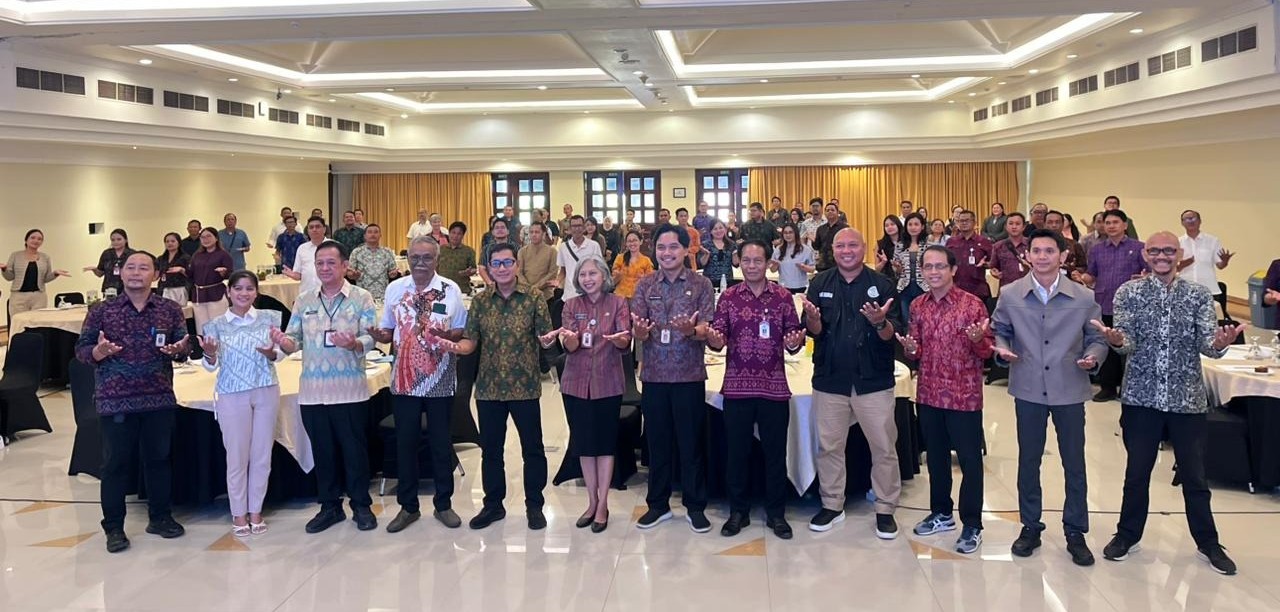
DENPASAR – The Denpasar City Government, through the Denpasar Tourism Office, held the 2026 Destination Gathering themed “Waste-to-Worth: Implementing Circular Economy in Denpasar’s Tourism” on Tuesday (April 28, 2026) in Sanur.
The event brought together speakers from various sectors, including environmental communities, tourism industry players, and government representatives, with the aim of encouraging the implementation of a circular economy in waste management within the tourism sector.
The event was officially opened by Denpasar Mayor I Gusti Ngurah Jaya Negara, represented by Regional Secretary I Gusti Ngurah Eddy Mulya. In his remarks, Mayor Jaya Negara stated that Denpasar, as both the city center and a domestic and international tourist destination, is not only required to provide quality tourism but also sustainable tourism.
One of the main challenges faced is the increasing volume of waste along with the growth of community activities and tourism.
“Waste management, especially from the tourism sector, must be carried out in an integrated manner. This affects not only the environment but also the image of the destination and the comfort of tourists,” the Mayor stated.
He further emphasized that waste should no longer be seen as a burden, but rather as a resource with economic value, in line with the source-based waste management concept already being implemented in Denpasar.
Chairman of Eling Ring Pertiwi, A.A. Ngurah Srijaya Widiada, as the first speaker, highlighted the importance of change starting from small actions carried out consistently.
Through his presentation titled “Small Action, Big Impact – Let’s Start Now,” he invited all parties to implement the zero-waste concept by making waste segregation at the source the key priority.
He also emphasized five core values that need to be applied: duty, devotion, discipline, discrimination, and determination, as the foundation for building environmental awareness and responsibility.
Representative of PT Bali Ocean Magic (Waterbom Bali) Management, Syifa Muntaha, presented the environmental management practices implemented at Waterbom Bali.
As a boutique botanical waterpark, Waterbom embraces the philosophy of karmic returns and applies the Tri Hita Karana concept in its operations, focusing on three main pillars: water, waste, and energy.
In waste management, Waterbom generates an average of 1,197 kilograms of waste per day, with waste generation per person at around 0.3 kilograms per day—lower than the national average of 0.7 kilograms per person per day.
Various policies have been implemented, such as banning single-use plastics, procuring environmentally friendly products, and processing organic waste through in-house composting facilities.
In one year, around 330 tons of organic waste were successfully processed, contributing to a reduction of 17 tons of CO₂e emissions.
Meanwhile, I Komang T. Ananda D. Priantara highlighted the importance of utilizing technology in waste management, particularly through a blockchain approach.
According to him, technology can provide transparency, traceability, and a digital incentive system for communities participating in waste management.
“Future waste management must be integrated across environmental, economic, and technological aspects, creating a transparent and sustainable system,” he said.
From the government side, Denpasar Environmental and Sanitation Agency (DLHK) representative Kadek Mahendra emphasized that waste management is a strategic issue in sustainable urban development.
DLHK continues to promote source-based waste management through waste sorting from households, businesses, and tourist destinations. Other efforts include public education, facility provision, regulatory strengthening, and regular monitoring and evaluation.
He stressed that the success of waste management depends heavily on synergy between the government, the community, and business actors.
Through this event, it is expected that collective awareness among all stakeholders will be strengthened to manage waste wisely and sustainably.
The waste-to-worth concept is seen as a concrete step in changing the paradigm of waste—from something considered a burden into a valuable economic resource—while supporting the realization of high-quality and sustainable tourism in Denpasar. **


