

SINGARAJA — Indonesia’s long-proposed North Bali International Airport moved closer to potential execution in 2025 after being formally included in the country’s 2025–2029 National Medium-Term Development Plan (RPJMN) under President Prabowo Subianto, raising expectations that the project will advance beyond planning after years of delay.
The airport, proposed for Bali’s northern Buleleng region, is positioned by policymakers and developers as a response to the island’s long-standing development imbalance, where economic growth and tourism infrastructure have been concentrated in the south, while northern areas lag in investment and connectivity.
More than 70% of Bali’s international arrivals currently pass through Ngurah Rai International Airport in the south, which is operating close to capacity, according to industry data. North Bali, despite its proximity to eastern Indonesia’s production regions and shipping routes, lacks direct international air access.
For project developer PT BIBU Panji Sakti, 2025 marked a year of consolidation rather than construction. The company signed a series of strategic memorandums of understanding aimed at building a full airport ecosystem covering infrastructure development, logistics, aerospace technology and low-emissions transport.
The inclusion of the project in the RPJMN has elevated it from a regional proposal to a national strategic agenda, increasing pressure on the central government to provide regulatory certainty and a clear implementation timeline.
Economist Ichsanuddin Noorsy said the government’s ability to execute listed projects consistently would be critical to maintaining investor confidence.
“The RPJMN is binding. Strategic decisions at the presidential level should not be undermined by sectoral interests,” he said, adding that prolonged uncertainty could weaken market trust.
Beyond passenger traffic, the airport is designed as a cargo and logistics hub for eastern Indonesia, targeting exports from Nusa Tenggara, Maluku and Papua, including seafood, horticultural products and goods from regional small and medium-sized enterprises.
PT BIBU Panji Sakti has said improved air cargo connectivity would reduce delivery times, preserve product quality and enhance Indonesia’s export competitiveness, positioning North Bali as part of the country’s broader logistics value chain rather than solely a tourism gateway.
During 2025, the company signed MoUs with international partners from Australia, China and Indonesia, covering airport design, green construction technologies and long-term financing structures. The total projected investment value is estimated at around 50 trillion rupiah ($3.2 billion).
State-owned firms PT Len Industri and PT Dirgantara Indonesia are involved in discussions related to airport navigation systems and the potential development of aircraft maintenance, repair and overhaul (MRO) facilities, which could expand Bali’s role in Indonesia’s aerospace support industry.
In parallel, the developer partnered with electric vehicle manufacturer PT Mobil Anak Bangsa to support a low-emissions transport system for airport operations, aligning the project with Indonesia’s energy transition targets.
The airport’s design incorporates Tri Hita Karana, a Balinese philosophy emphasising harmony between people, nature and spirituality, reflecting efforts to align large-scale infrastructure development with local cultural values.
“This project shows that advanced technology and local wisdom can go hand in hand,” said Ida Bagus Putu Dunia, a former Indonesian air force chief and a commissioner at PT BIBU Panji Sakti.
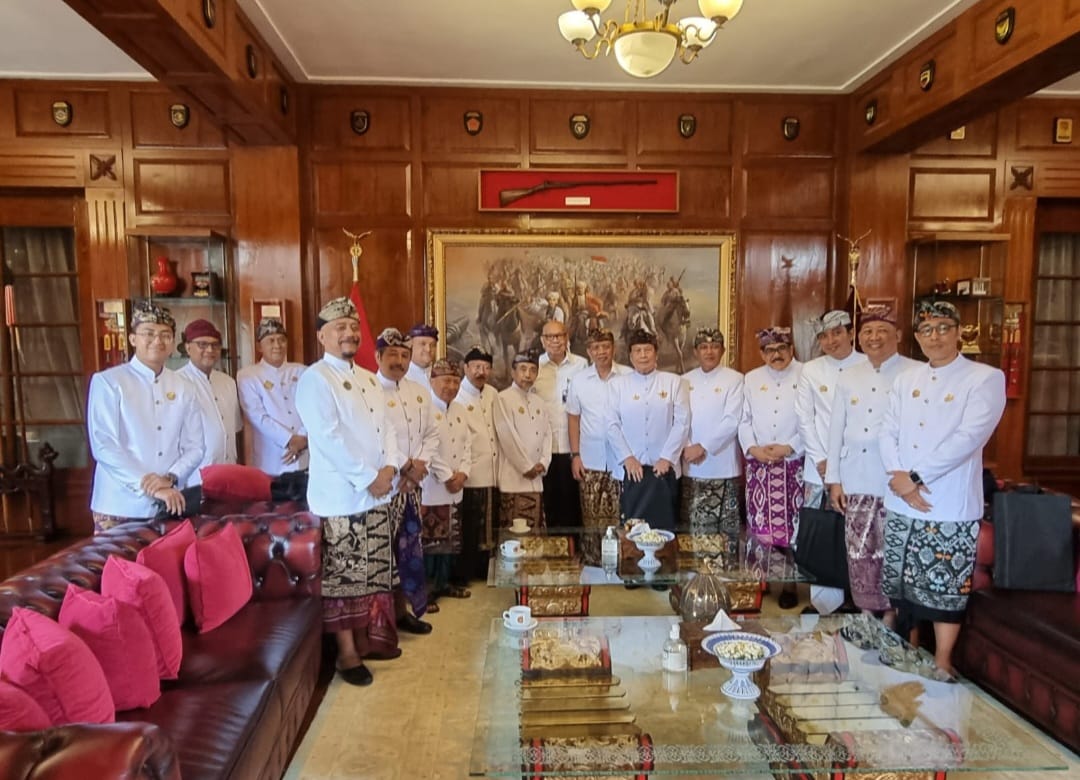
Support for the airport has also come from traditional Balinese leaders in northern regions, who have urged the government to move from policy commitments to implementation.
While 2025 helped consolidate political backing and investor interest, analysts say the next phase will determine whether the project progresses into execution.
President Prabowo now faces an early test of delivery, with the North Bali airport seen as a benchmark for his administration’s commitment to regional development equity, logistics resilience and long-term infrastructure reform in Indonesia.***


