


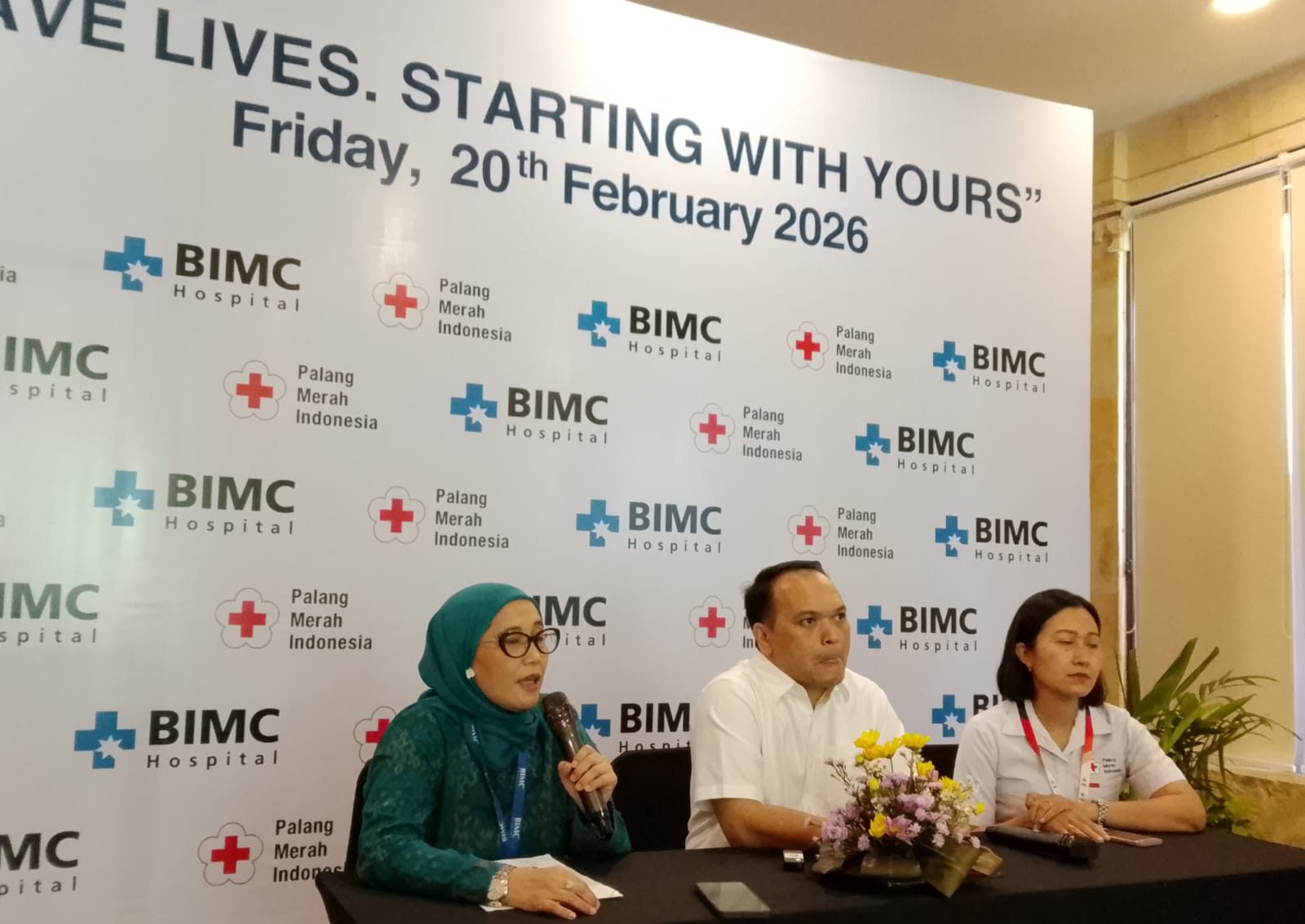
BALI — BIMC Hospital Kuta hosted a public health forum titled “Save Lives. Starting With Yours” on Friday at Prama Sanur Beach Bali, aiming to raise awareness about the critical shortage of Rhesus Negative (Rh-) blood donors on the island.
According to data from the Indonesian Red Cross (PMI) Bali Province, the number of registered Rh-negative donors remains extremely limited: 50 individuals with A-negative blood, 23 with B-negative, 123 with O-negative, and only two with AB-negative.
Health officials say the scarcity poses a serious challenge for medical facilities, particularly in emergency cases requiring blood transfusions with specific Rhesus compatibility.
The forum featured dr. I Ngurah Arya Wicaksana, an intensivist at BIMC Hospital Kuta, who outlined the medical urgency of maintaining adequate Rh-negative blood supplies. Ni Luh Putu Arista Apriyanti, Head of Quality Control Testing at PMI Bali, presented current data on blood stock availability and operational challenges in the field.
An inspirational testimony was delivered by Mike Lambrou of the Bali Hash House Harriers community, who has consistently donated his Rh-negative blood and encouraged both international residents and local communities to register as donors.
Dr. Meike Magnasofa, Director of BIMC Hospital Kuta, emphasized the importance of cross-sector collaboration in building a more resilient rare blood donor system.
“BIMC Hospital Kuta is collaborating with PMI Bali Province to increase public awareness and establish a stronger network of Rhesus Negative donors, which remain very rare in Bali. Our hope is that in emergency situations, no life is lost due to the unavailability of the required blood,” she said.
Dr. Nyoman Sastrini, Head of Donor Services at PMI Bali’s blood transfusion unit, noted that the scarcity of Rh-negative blood presents an ongoing challenge in transfusion services across the province.
“Genetically, Rhesus Negative blood types are indeed rare in Indonesia. Availability depends heavily on registered, active donors who can be contacted quickly during emergencies,” she explained. “Cases requiring Rhesus Negative blood often become critical situations because the donor pool is extremely limited. It is vital for individuals with Rh-negative blood to be registered and willing to donate regularly.”
Through this initiative, BIMC Hospital Kuta and PMI Bali aim to expand and strengthen a responsive Rhesus Negative donor database while reinforcing humanitarian networks to safeguard patient safety on the island.
Organizers said the event serves as a reminder that a simple step—knowing one’s blood type and volunteering to donate—can become a life-saving act for others.***


